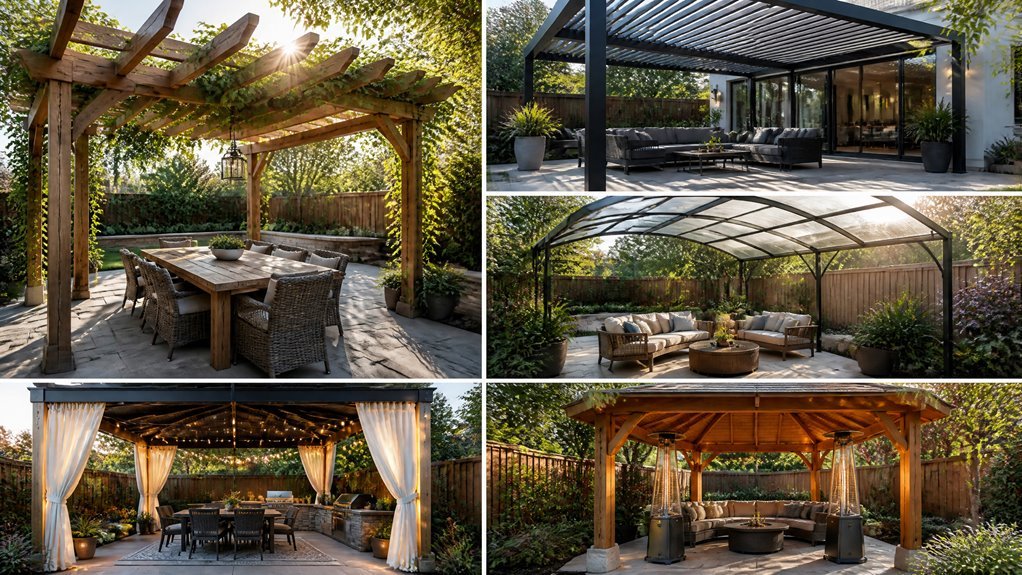
I’ve learned that extending a patio’s season requires more than a simple awning. A motorized pergola with 6-inch louvred blades offers 120 square feet of adjustable shade for roughly $8,000 installed.
Fixed Douglas fir structures halve that cost but sacrifice flexibility.
The question becomes whether you value adaptability or permanence, and what that choice reveals about how you intend to live outdoors.
Start With a Pergola for Adjustable Patio Shade and Lighting
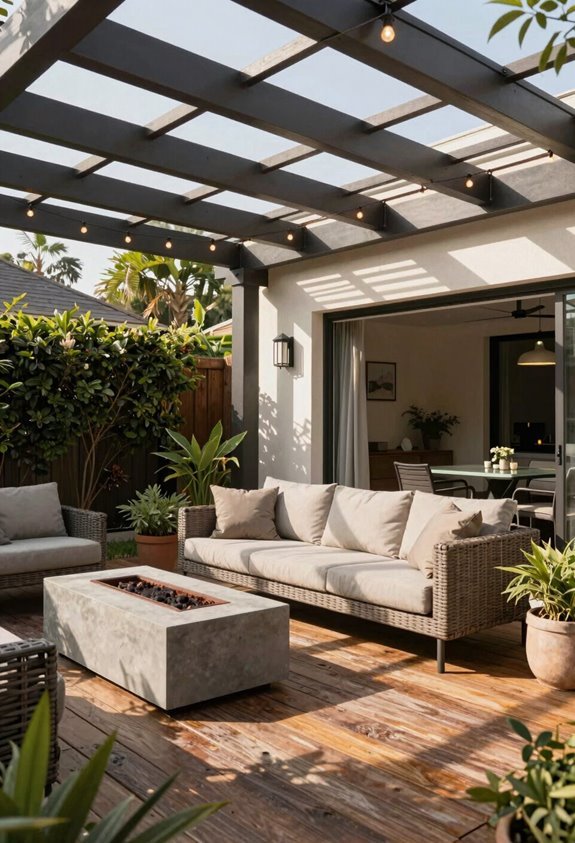
Why settle with a patio that retreats with the sun when a pergola can extend your living space through every hour and season? I’m inviting you to reconsider your patio cover as something far more transformative than mere shelter.
A motorized pergola delivers adjustable shade at the touch of a button, letting you modulate sun exposure from dawn’s gentle rays to midday’s intensity, all while framing your outdoor living with architectural intention. I think of it as a lighting framework, too: Douglas fir tongue-and-groove ceilings with exposed rafters create that farmhouse warmth we crave, while pendant fixtures and wind-conscious hanging lights extend our gatherings past twilight.
Whether freestanding or attached, this structure offers real year-round shade and weather protection, welcoming you into outdoor lighting made for belonging.
Add Fabric Sails or Curtains for Flexible Sun Protection
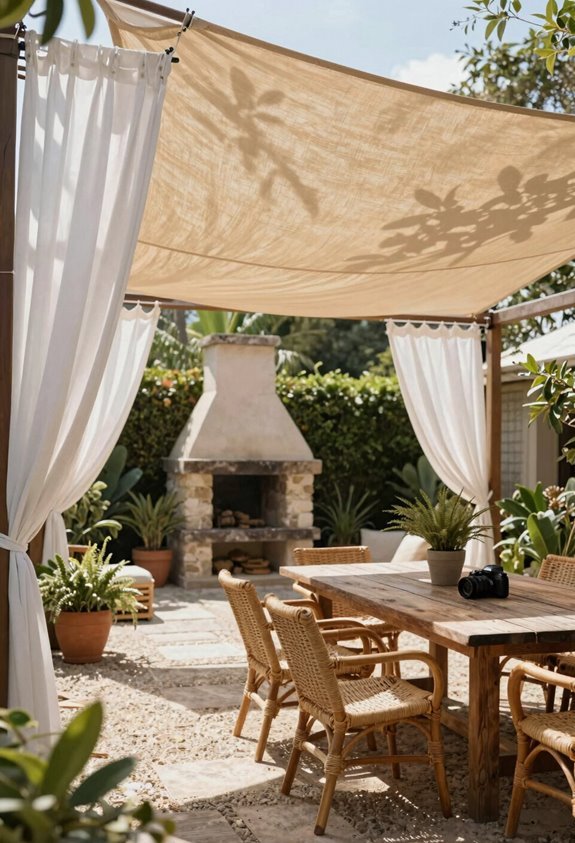
How might we soften the architectural rigor of our overhead structure without surrendering its protective purpose? I find that fabric sails and outdoor curtains turn our patios into livable extensions of home, offering flexible sun protection that adapts throughout the day.
Drifting linen panels filter harsh afternoon light while creating intimate gathering zones where we want to linger. For year-round living, you’ll want to prioritize fabric durability: Sunbrella panels, though $400–$1,000, outlast budget polyester alternatives considerably.
Consider these shade options for your space:
- Layer a lightweight canopy beneath existing beams for diffused, golden-hour ambiance
- Install outdoor curtains on galvanized cable for adjustable privacy and wind buffering
- Select high UV protection ratings (UPF 50+) to safeguard skin and prevent fading
- Plan weather integration with quick-release hardware for storm removal
- Embrace edge banding and generous drape for that refined, collected aesthetic
Choose Motorized or Fixed Patio Covers for Year-Round Use
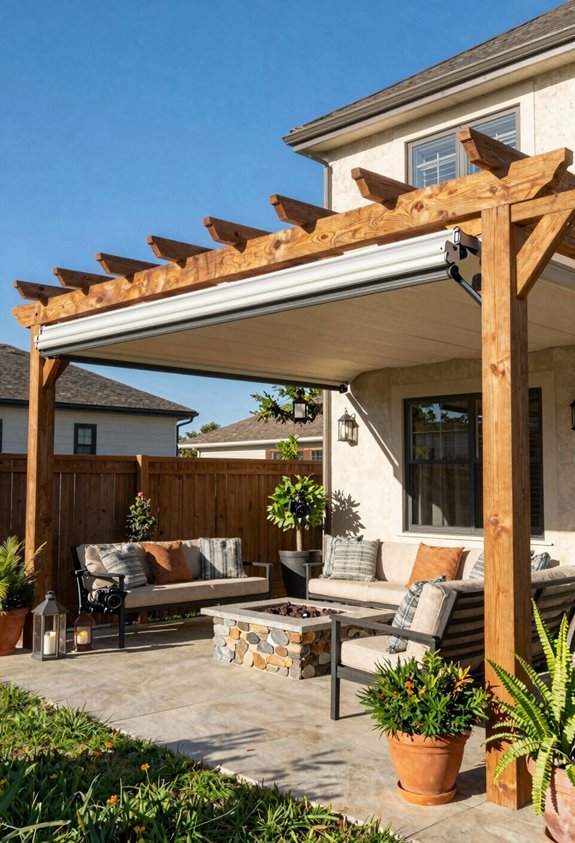
When we’re ready to elevate our outdoor space from seasonal retreat to genuine year-round sanctuary, the choice between motorized louvered systems and fixed solid covers becomes our defining architectural decision.
Embracing a motorized pergola with rotating aluminum louvers grants us complete sun/shade control through remote control, transforming our gathering space from sun-drenched openness to weatherproof haven within seconds, with climate durability proven against 200-mph winds and 65-psf snow loads.
Alternatively, a fixed patio cover offers uncompromising rain protection, lower maintenance, and year-round use at reduced cost, though we sacrifice adaptability and natural light.
| Sensation of Control | Empowered mastery over elements | Grounding permanence and shelter |
| Family Memory | Laughing through sudden rain | Cozy togetherness beneath solid roof |
| Investment Fear | Technology complexity | Future regret of immobility |
| Belonging Realized | Welcoming guests to adaptable luxury | Creating tradition in protected space |
We determine which aluminum louvers or fixed panels best express our vision of enduring outdoor living.
Build a Sunken or Multilevel Layout to Define Outdoor Rooms
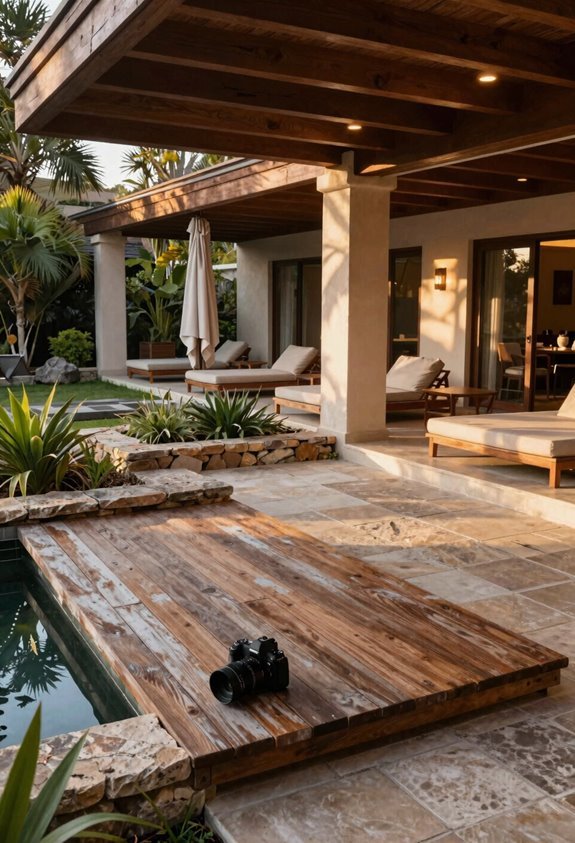
Though we may begin with a flat expanse of poured concrete, I envision something far more architectural: lowering the lounge area twelve to eighteen inches below grade to carve out an intimate conversation pit that channels mid century Palm Springs, its perimeter walls doubling as casual seating while a raised dining platform just four steps away maintains commanding sightlines across the garden.
Use zoning with levels to naturally separate your dining/lounge zones without building walls. Let a cantilevered roof extend asymmetrically, casting shade precisely where afternoon gatherings unfold. Select patio cover ideas that respect each tier’s ceiling height and function. Employ a multilevel layout so steps become spontaneous perches for circulating guests.
Deepen landscape integration by wrapping sunken patio edges in drought-tolerant plantings that blur interior-exterior boundaries.
This approach reimagines outdoor living as choreographed experience, where elevation itself generates rhythm and refuge among cohesive outdoor rooms.
Finish With Timber Frames and Climbing Vines for Natural Style
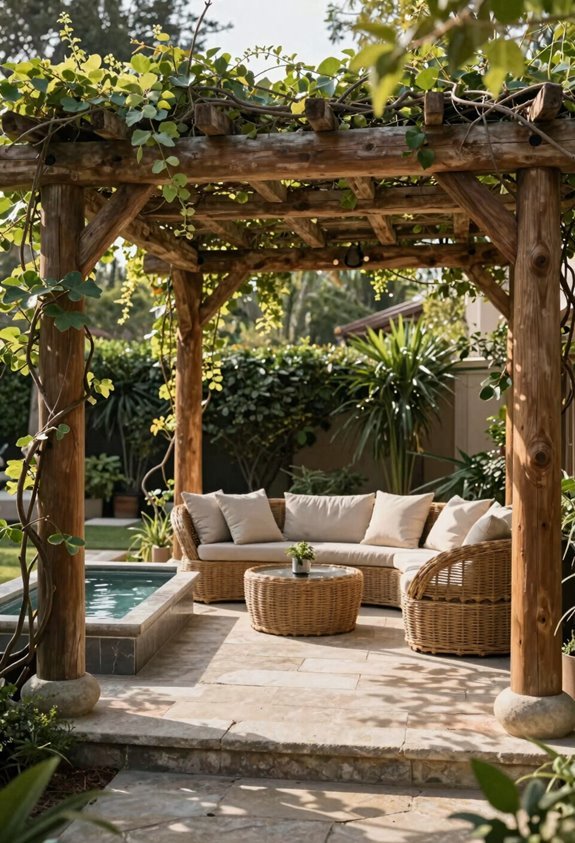
Three structural elements transform a simple pergola into something I consider truly habitable: the rhythm of exposed joinery overhead, the dimensional warmth of Douglas fir tongue-and-groove ceiling boards, and the deliberate patience of vines I’ve trained to colonize the frame.
In my own timber-frame pergolas, I select organic materials that weather gracefully, letting wisteria, roses, and jasmine weave living shade that deepens through seasons. This natural style isn’t merely aesthetic; it’s functional architecture, with mature vines filtering summer glare and fostering real exterior-interior dialogue between garden and sheltered space. I’ve learned that maintenance pruning every dormant season prevents structural strain while preserving the airy architecture that defines year-round outdoor living.
When you choose this path, you’re cultivating membership in a landscape rather than simply building upon it.